NASP25 reflections
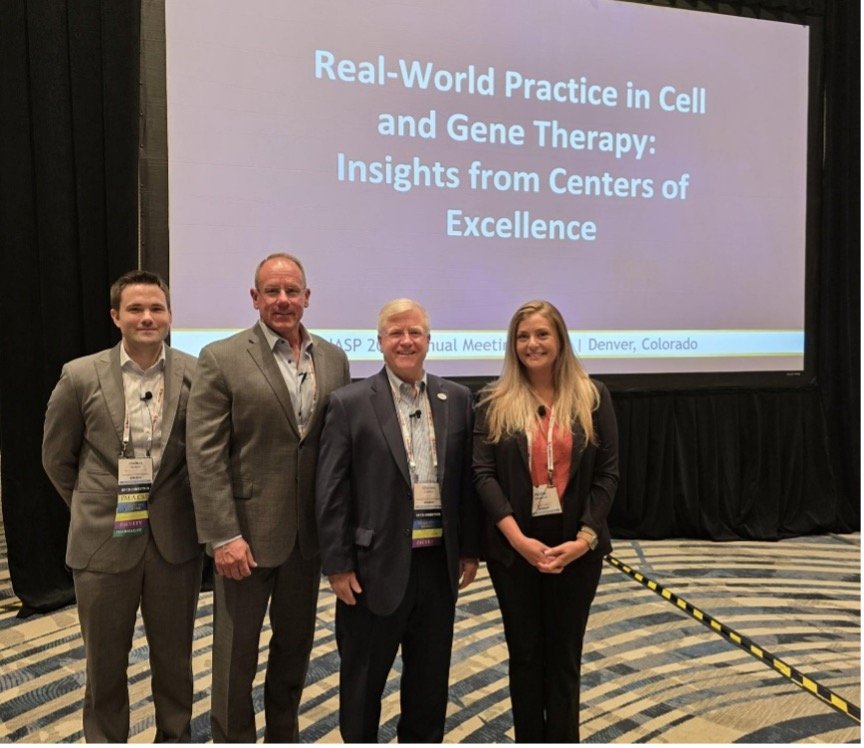
NASP CGT Workshop “Real-World Practice in Cell and Gene Therapy: Insights from Centers of Excellence” panelists (left to right) Josh Weber, Senior Director, Ambulatory, Retail & Specialty Pharmacy Services, Rocky Billups, Vice President of Operations, HCA/Sarah Cannon, Chuck Collins, Panel Moderator, President, Healthcare Stakeholder Solutions, and Alisha Atchison, Pharmacy Technician, UVA Health.
Cell and gene therapies, rare disease care, and the power of authentic communication
NASP25 was alive and well! With record-breaking attendance, the conference brought together a broad mix of specialty pharmacists, pharma manufacturers, providers, and industry partners.
The multiple educational tracks and session formats kept participants engaged and informed on the latest developments impacting our work. From clinical innovation to contracting to patient experience, NASP25 provided a comprehensive view of where specialty pharmacy stands today—and where it is heading.
Cell and gene therapies are no longer off in the future, but are here now
As a member of the NASP Cell & Gene Therapy (CGT) Workgroup, I was energized to see how NASP has embraced this transformative space. Our dedicated day-long workshop examined practical advances in CGT, insights from Centers of Excellence, payer and contracting considerations, and the indispensable role specialty pharmacies play in delivery and patient support.
One of the most profound experiences for me came midweek when I had the opportunity to meet my first gene therapy–treated patient, Taylor John. Taylor no longer lives under the daily burden of painful sickle-cell crises thanks to receiving gene therapy. Hearing her describe her journey—the hurdles, the doubts, the determination to qualify for and receive treatment—was both humbling and inspiring.
Her story was a powerful reminder that innovation is never about the science alone. It is about the patient—the human being whose life is changed. We must never lose sight of that. I want to extend sincere thanks to Karen Silverblatt Nameth (Inovalon) and Kim Tedesco (Walgreens) for organizing this moving panel, and to Taylor for her openness and courage in sharing her story.
Key takeaway:
How is your organization preparing to manage the complexity of CGT? Identify one area—whether operational readiness, payer engagement, or patient education—where you can start strengthening today.
Rare disease programs: expanding and evolving
Another theme that struck me at NASP25 was the continuing expansion of rare disease care. These patients face long, complicated diagnostic journeys, fragmented care, and high emotional and financial burdens. Specialty pharmacies are uniquely positioned to improve their outcomes—but only if we move beyond a one-size-fits-all approach.
Customizing programs to reflect the unique needs of rare disease patients is essential. That may mean developing disease-specific adherence programs, offering expanded counseling support, or ensuring data flows seamlessly between pharmacy, provider, and payer. NASP sessions emphasized that the demand for rare disease–tailored pharmacy solutions will only increase, and our field must be ready to step up.
Key takeaway:
Review your rare disease portfolio. Are there gaps where patient-specific education, counseling, or financial navigation could be enhanced? What small step could you implement this quarter?
The human side of communication
NASP is known for delivering high-impact keynote speakers, and this year was no exception. One presentation that resonated with me focused on the art and science of effective communication—something that is often overlooked in our clinically driven world.
The message was clear: communication isn’t just about conveying information. It’s about connection. Whether speaking with a patient, a colleague, or a policymaker, being fully present, authentic, and genuinely connected makes a measurable difference. The speaker emphasized that specialty pharmacists, in particular, sit at a critical intersection of science, access, and empathy. Our ability to communicate clearly and compassionately can determine whether patients feel supported, understood, and empowered.
Key takeaway:
In your next patient or stakeholder conversation, pause and consciously commit to being “in the moment.” Reflect afterward: did it change the quality of the interaction or the outcome?
Closing reflections
Walking away from NASP25, I was reminded of the dual responsibilities we carry: to keep pace with the rapid innovation reshaping healthcare, and to keep the patient at the center of everything we do. Cell & gene therapy advances, rare disease programs, and human-centered communication are not just trends, they are imperatives for the future of specialty pharmacy.
Let’s continue to move forward with innovation in one hand and patient stories in the other. That balance will define our success.