The AI we get starts with the choices we make
Why Robert Wright's The God Test shifted how I think about AI
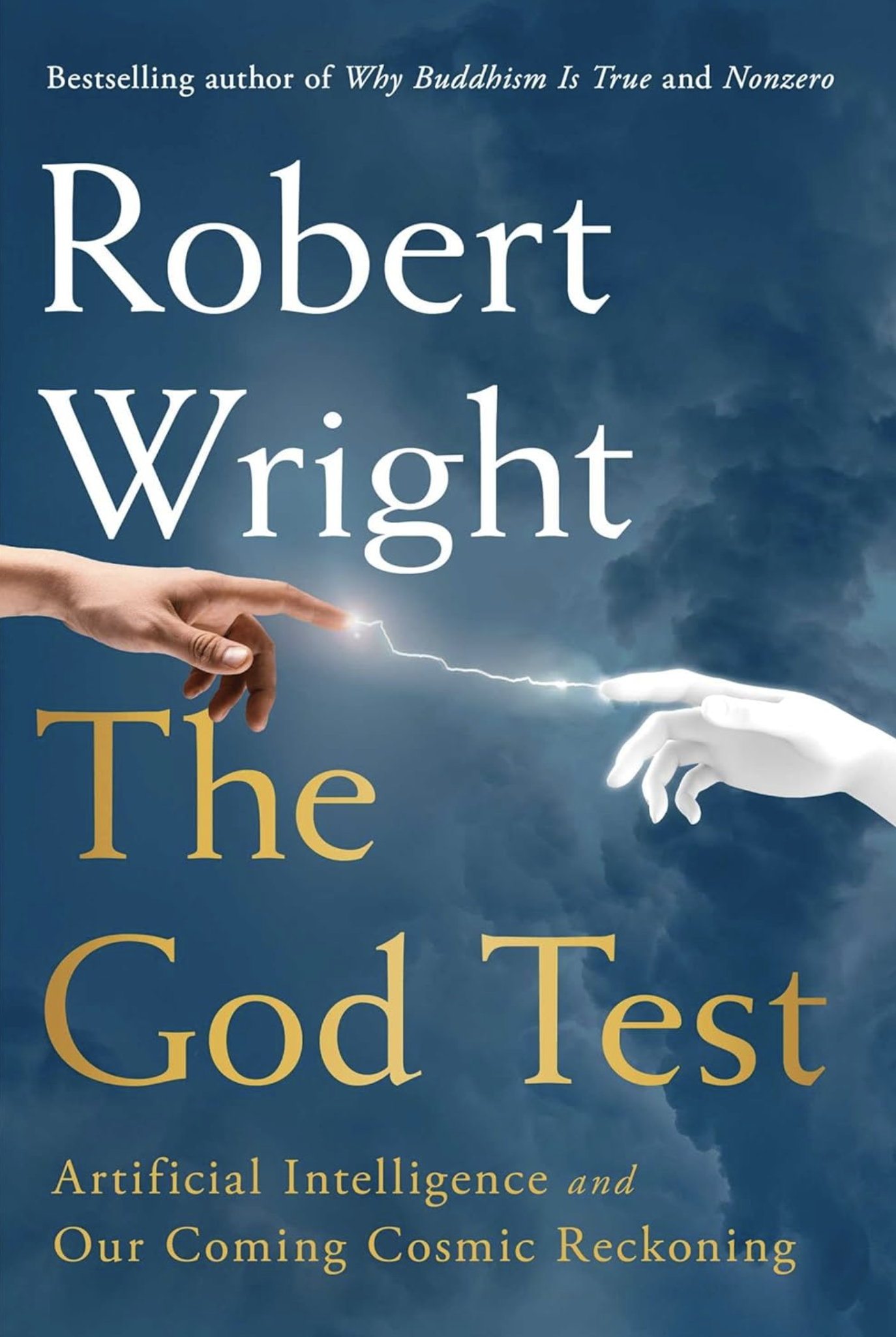
The final sentence of Robert Wright's new book The God Test has stayed with me long after I finished reading it: If a silicon God—a superintelligence that plays a central and pervasive role in the affairs of this planet—does arrive, it could, for all we know right now, be a good God or a bad God. The one thing I feel confident of is that it will be, in some sense, the God we deserve.
That's a provocative statement. Depending on your perspective, it may sound inspiring, unsettling, or even a little dramatic. But I don't read it as a prediction, I read it as a challenge.
The question isn't whether AI wins or not
Much of the public conversation around AI has settled into two opposing camps: one side believes AI will solve humanity's greatest problems. The other believes it threatens jobs, privacy, creativity, and perhaps even civilization itself. I find myself somewhere in the middle, at least for now.
After spending the last several years speaking with AI innovators, pharmacy executives, startup founders, clinicians, and technology leaders through the RxRoundtable, I've become convinced that neither extreme is particularly helpful. The future won't be determined by technology alone; it will be determined by how thoughtfully we choose to develop and use it. That's what I believe Wright is ultimately asking us to consider.
Cognitive sovereignty matters
One phrase I've been thinking about lately is cognitive sovereignty, which, simply put, is our ability to think for ourselves. We often talk about AI replacing tasks, but I'm more interested in whether we’ve slowly begun outsourcing judgment, which is already happening in subtle ways.
Social media algorithms have spent years influencing what we read, what we believe, and even how we feel about the world, all with the intent to provide the user a catered experience and satisfy hungry advertisers. However, instead of simply showing us information, AI converses with us, reasons with us, and encourages us. Sometimes it even tells us exactly what we want to hear, such as AI’s classic sycophant feedback, which is great for ego boost, but can lead to repetitive use which may not be in our best interest.
Why wrestle with a difficult problem when an AI can generate an answer in seconds? The convenience is real and so are the potential risks, much of those risks we still don’t know or fully have in “the plan.” If we stop exercising our own judgment, we don't lose it overnight: we subtly surrender it one decision at a time.
“If a silicon God - a superintelligence that plays a central and pervasive role in the affairs of this planet - does arrive, it could, for all we know right now, be a good God or a bad God. The one thing I feel confident of is that it will be, in some sense, the God we deserve.”
—Robert Wright, The God Test: Artificial Intelligence and Our Coming Cosmic Reckoning, June 23, 2026
Healthcare has more at stake than most industries
In pharmacy and managed care, AI isn't an abstract concept. It's already helping improve operational efficiency, prior authorization workflows, medication management, customer service, fraud detection, clinical documentation, and countless other functions. These are meaningful advances, but healthcare has always depended on more than efficiency. For example, patients expect judgment, they expect ethical practices, and they expect their healthcare professionals and the AI tools and infrastructure they deploy to know when to trust the machine and when not to.
That's why I believe healthcare leaders have an obligation to become better versed about AI beyond the latest product announcement or vendor presentation. We need enough understanding to ask better questions, recognize limitations, and make thoughtful decisions about where AI belongs and where human expertise remains indispensable.
The technology itself isn't the problem, our priorities are
One of the most encouraging ideas in Wright's book isn't about superintelligence at all, it's his belief that AI could become one of humanity's greatest tools for solving problems that have challenged us for decades. Imagine if the world's leading AI organizations competed to discover new treatments for Alzheimer's disease, various cancers, or rare genetic disorders with the same intensity they currently compete on benchmark scores and model rankings. I think that is a future worth pursuing.
We need better questions
Reading The God Test hasn't made me more optimistic or more pessimistic. It has made me more intentional. It's one reason I've invested so much energy into bringing AI discussions to the RxRoundtable community. It's why we're hosting conversations, inviting innovators to share their work, and organizing a debate on the broader implications of artificial intelligence.
The pharmacy profession has always adapted—albeit sometimes stubbornly—to profound technological change. AI will be the most significant transformation yet. Whether it strengthens our profession or weakens it will depend less on the software itself than on the wisdom of the people who deploy it.
Robert Wright may be right. If we someday build something with extraordinary intelligence and influence, it will reflect the choices we make today. That places the responsibility exactly where it belongs—not on the machines, but on us.