Voice agents: the next shift in specialty pharmacy intake
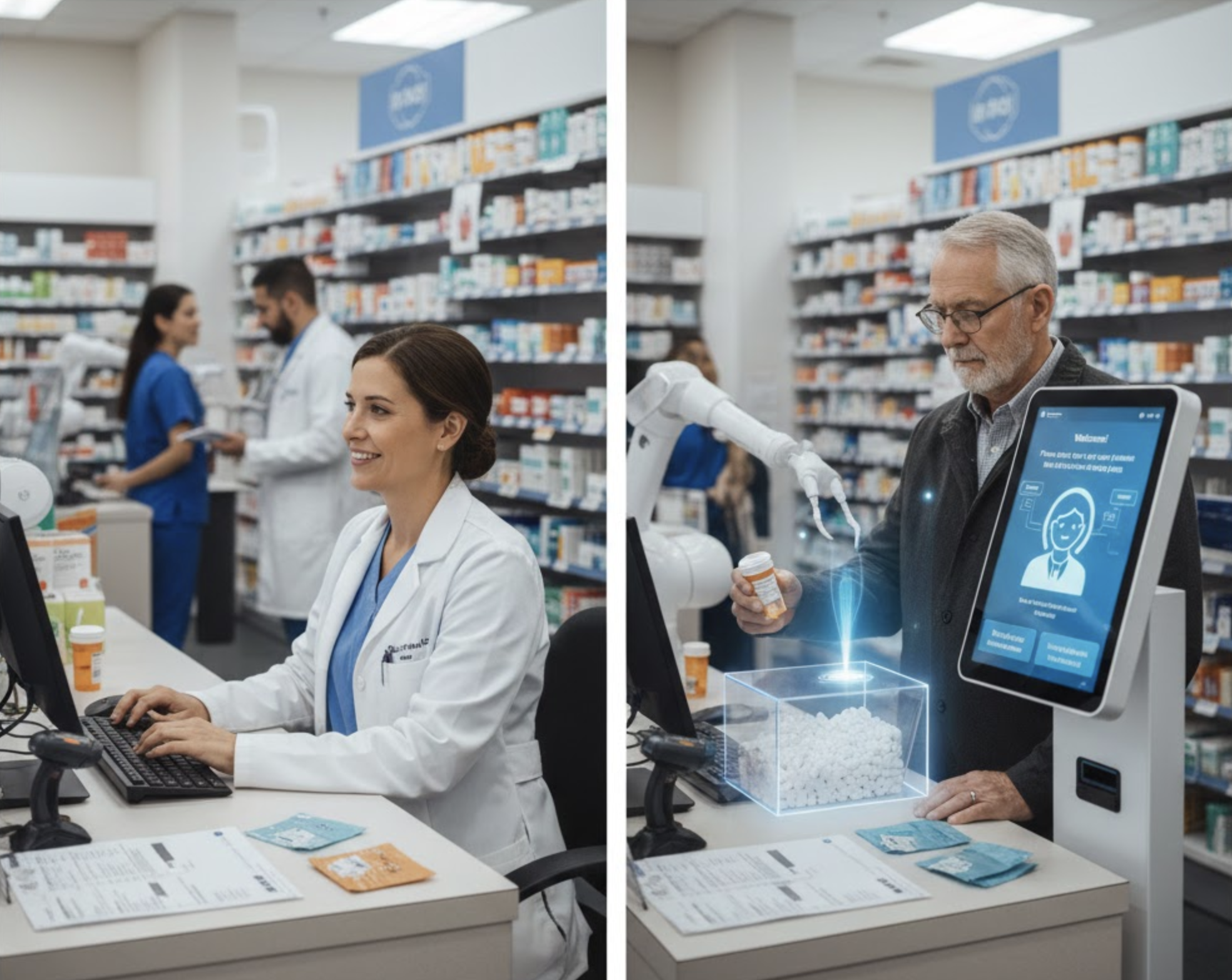
Could this be the “before and after” reality of AI’s infiltration into the pharmacy space?
One of the most routine yet resource-intensive steps in specialty pharmacy happens before therapy even begins: the intake call.
When a new prescription or clinical order arrives, someone from the pharmacy reaches out to confirm demographics, insurance information, and other required details. It is essential work, and it happens thousands of times each day across the industry.
It is also exactly the kind of process AI agents are beginning to automate.
From call centers to intelligent voice workflows
I am hearing from multiple companies building healthcare voice agents that specialty pharmacy clients are already seeing meaningful productivity gains. That should not be surprising. Intake calls are highly structured, rules-based, and repetitive. There is little creativity involved and no persuasion required. It is largely a transfer and confirmation of information.
Technologists often call these repetitive cognitive tasks, or RCTs. Anywhere RCTs exist, AI solutions are moving quickly.
Across healthcare more broadly, voice agents are already being used to collect patient information, verify insurance details, schedule visits, and conduct follow-up outreach. These systems can handle high-volume routine communication, reduce administrative workload, and improve response times for patients.
Some implementations report that automation can handle a large share of routine calls while maintaining high accuracy and improving staff efficiency, with measurable reductions in scheduling workload and improved satisfaction scores.
For specialty pharmacies facing staffing constraints, reimbursement pressure, and growing patient complexity, freeing trained staff from structured intake calls can allow them to focus on clinical coordination, problem resolution, and patient support that requires human judgment.
The adoption hurdle: memories of bad automation
If the operational logic is flawless, why are many specialty pharmacies resisting deploying these technologies?
History.
Earlier generations of phone automation often created frustration rather than efficiency. Patients remember rigid scripts, endless menus, and difficulty reaching a human. That experience still shapes how leaders think about automation today.
But the technology has changed significantly. Modern voice agents rely on natural language understanding and conversational AI that can interpret context, respond dynamically, and escalate appropriately when needed. They are not the “press 1 for billing” systems of the past.
In fact, conversational AI systems in healthcare settings are increasingly capable of maintaining natural dialogue and supporting patient interactions in ways that reduce delays and improve engagement. The technology barrier is shrinking as marketplace adoption gains momentum, especially as the technology improves. The strategic question is becoming something else.
“We utilized our voice agent to reach out to just over 2,000 Medicare re-enrollees. Through that campaign, we saved approximately 114 hours of phone time, with only a 0.5% opt-out rate. The vast majority of patients did not realize they were interacting with an AI voice agent, even with an average call length of more than four minutes. The patient reception was overwhelmingly positive and reinforced for us that this technology deserves serious consideration within community pharmacy.”
Efficiency is only the starting point
Completing intake calls with AI will likely become table stakes. The real opportunity is how that interaction fits into the patient experience.
The intake call is often the first live touchpoint a patient has with the specialty pharmacy. It sets expectations and tone, especially for people dealing with complex therapies or serious conditions. If automation simply makes the interaction faster but less supportive, organizations may gain efficiency while weakening trust, especially with patients who require a higher-level of attention such as those with communication disorders, disabilities, or non-native English speakers.
Forward-looking pharmacy leaders should be asking:
What impression should this first call leave with the patient?
Where should the voice agent transition to a human for reassurance or clinical nuance?
How can automation reinforce, rather than dilute, the pharmacy’s brand and service model?
In other words, do not treat voice agents only as a cost-reduction tool. Treat them as part of your customer-experience design.
Intake is just the beginning
Outbound intake calls are one of the most visible RCTs in specialty pharmacy, but they are far from the only ones.
Anywhere staff are repeatedly gathering structured information, confirming details, or executing rules-based cognitive steps, there is likely an opportunity for AI assistance. Across healthcare, organizations are already using conversational systems to automate routine communication, scale operations without adding headcount, and improve consistency in patient interactions.
The pharmacies that benefit most will not be those that automate one workflow. They will be the ones that systematically identify RCTs and redesign processes so AI handles the predictable steps while humans focus on judgment, empathy, and clinical coordination.
Voice agents may enter specialty pharmacy through intake first, but they will not stop there.
What you can do
Map your intake workflow and identify which steps are purely structured information exchange
Evaluate voice-agent vendors using both productivity and patient-experience criteria
Define clear escalation points where a human should take over the interaction
Decide what impression you want your first patient call to leave
Look across your organization for other repetitive cognitive tasks that could benefit from AI support
Resources and links
AI voice agents completing scheduling, verification, and refill workflows in healthcare (Examples of voice agents handling scheduling, prescription refills, and insurance verification at scale.)
Automation of high-volume patient calls so staff can focus on complex needs (Explains how AI voice agents automate routine calls and allow human staff to focus on higher-empathy interactions.)
AI agents executing workflows end-to-end across systems (Describes AI agents as autonomous systems that understand requests, pull data, apply rules, and complete tasks.)
Healthcare call-center automation use cases including insurance verification and medication workflows (Details real operational uses such as eligibility checks, refill intake, scheduling, and follow-up automation.)
Real-world example of AI voice agent handling verification calls and increasing efficiency (Reports AI agents performing verification calls, updating records automatically, and significantly increasing processing speed.)